So I was forwarded this and I'm not really sure if its accurate or if it is in fact by Maya Angelou. I have to say I don't personally find it to be Angelou's best poem ever, but it does have some good advice.
A WOMAN SHOULD HAVE ... enough money within her control to move out and rent a place of her own, even if she never wants to or needs to... something perfect to wear if the employer, or date of her dreams wants to see her in an hour...
A WOMAN SHOULD HAVE .. a youth she's content to leave behind.... a past juicy enough that she's looking forward to retelling it in her old age.... a set of screwdrivers, a cordless drill, and a black lace bra... one friend who always makes her laugh... and one who lets her cry...
A WOMAN SHOULD HAVE ....... a good piece of furniture not previously owned by anyone else in her family... eight matching plates, wine glasses with stems, and a recipe for a meal, that will make her guests feel honored...
A WOMAN SHOULD HAVE .. a feeling of control over her destiny..... how to fall in love without losing herself..
EVERY WOMAN SHOULD KNOW... how to quit a job, break up with a lover, and confront a friend without; ruining the friendship....
EVERY WOMAN SHOULD KNOW.... when to try harder... and WHEN TO WALK AWAY...
EVERY WOMAN SHOULD KNOW... that she can't change the length of her calves, the width of her hips, or the nature of her parents.. that her childhood may not have been perfect...but it's over...
EVERY WOMAN SHOULD KNOW... what she would and wouldn't do for love or more..... how to live alone... even if she doesn't like it...
EVERY WOMAN SHOULD KNOW.. . whom she can trust, whom she can't, and why she shouldn't take it personally...
EVERY WOMAN SHOULD KNOW... where to go... be it to her best friend's kitchen table.. or a charming Inn in the woods... when her soul needs soothing...
EVERY WOMAN SHOULD KNOW... What she can and can't accomplish in a day... a month...and a year...
Do you ever feel as if you might be insane and you would rather just fall into it? Like it might be more pleasant to drown than to fight the waves?
I don't want to be good anymore. I don't want to be bad, per se, I just want to give myself up to life. I don't want to temper my passions anymore. I want love, creativity, revolution...Everything I've always wanted, everything I am....I feel afraid to face myself, because what if I die? What if I really do drown in my own intensity? But I can't fight it anymore.
So let me fall, let me dream of you a little, however irrational, dangerous, or insane. Did you know I believe in love at first sight? I don't advertise it, but I do.
I want so much more than just salvation, even if I risk salvation to get it. Is that wrong or is it True? Will I be cast out?
If I am, maybe you'll be there...
The authors create the feeling that they are both knowledgeable and really understand what it is like to be a student, which reminded me of my uncle who works at CSU-Bakersfield. It also seems like they might work in different disciplines, however the author's note puts them all in English and Literature. This just further shows what a good job they've done being interdisciplinary.
If you're style runs to the bohemian at all, you should check out the scarves and made-to order jewelry at A Peace Treaty. The scarves are gorgeous, and the jewelry is both modern and buried-treasure looking. Incidentally, this guy is also really hot.
I got no motivation
Where is my motivation?
No time for the motivation
Smoking my inspiration
--"Longview"--Green Day
Okay, so I'm not smoking it. I'm writing it down in notebooks and staring at it. I planned to actually work today, but it's not happening. At least I'm writing something, even if it's not what I want to be writing, or should be or whatever. So why don't I just go do that? Bleh.
Whine,
Whine,
Whine.
Don’t equate your self-worth with how well you do things in life. You aren’t what you do. If you are what you do, then when you don’t . . . you aren’t.
----Wayne W. Dyer
So as you may have gathered, my time is stictly limited. Here is an extremely rough view of my first month here.
As you can see, the flat has been taking shape. We have been able to decorate a bit, and the living room now has furniture. Unfortunately, the plumbing in our apartment is not first rate, so we are waiting on maintenance to come fix the toilets.
I started working for the school newspaper. I got a movie review published and am now interim calendar coordinator, which means I get to know everything that's going on on campus and in town (though I still don't actually attend any of it). If you go to the website, you can find my review as well as see that almost all calendar events were submitted by moi.
Speaking of moi, I have started school-I have four credits humanities, four credits aesthetics, four credits french, and two credits creative writing. (I think this is the best way to explain my course load to non "greeners", as they call us up here.) I love the subject, but school is kicking my butt. I spent 10 hours on homework today. 10! I'm finding French pretty easy to understand, but it's still 8 hours of homework-apart from basic studying. I am in school eight hours a day just in class, and the other night (between class and the paper) I didn't get home till 11 pm. I am still broke, despite my hard work. ;) I am accepting donations if you want to send me a personal check or money order. I still haven't found a real job yet, but I will be going to an employment workshop tomorrow. The images above are my view on my way to class (so lucky) and my view from the back corner of the bus (not so lucky, just crammed!)
On the fun side of things, my roommates and I went to Seattle the other day. J'adore Seattle! (Side effect of the French. I've been dreaming in it, which is awkward seeing as I've only had two classes and don't know much yet.) I was very disciplined, only buying food, ferry tickets, and okay, one book for my mother because it's going out of print and I couldn't resist. (It is coming Mommy, I just have to buy stamps!)
Britnee, Jean, Me.
Now a note from Toby-what he doesn't like and does like about college.
Dislikes:
Being confined in the apartment all day.
The declining frequency of treats.
Taking showers.
Being alone.
Most of the dogs at hearthstone, notably that smug boston terrier-pug mix.
Likes:
The balcony.
The smells.
The balcony.
The fact that going outside lasts longer than 2 minutes.
The blacony.
One of the dogs at hearthstone, namely the papillon that lives next door.
The balcony.
Chasing Girlfriend all over the apartment.
The balcony.
Toby in his chair and the yard, respectively.
Toby actually has taken an upswing in energy, and he's lost a little weight. I do get worried because after his monthly bath, he gets much colder here than in Salt Lake. I wrapped him in a dog coat and t-shirt, which he hated, but it's better than the violent shiver he had just before I put it on. Strangely, I miss Toby just as much as anyone. I'm always worring that he needs to go out and I don't know it, that he didn't get fed enough, that he misses me. His seperation anxiety was pretty bad my first week at the paper-he even peed inside. I feel a little bit better when he's able to wander about the pines on the dog run, or when I snuggle him and he seems happy. I have definetly decided that I'm going to get a pizza and breadsticks for us to share one day, like we used to on my days off when there was no one at home to hear his complaints. I'm sure Toby would love familiar visitors, hint hint.
I also need a Ruby Tuesday cherry coke at least once a month I've decided. I'm jonesing, I tell you. And while not quite as effervescently lovely as Millie's, they're pretty good.
So now that I am finally unpacked and generally settled (if not actually organized), I can blog all about my adventures in Olympia thus far.
Getting here has been one hell of a ride. The car died 22 miles outside of Baker, Oregon. (Miraculously, we were able to slowly find a Dealership with what has to be the nicest man on the planet) Then Mother and I got lost in Pendleton, Oregon, likely further screwing up the car. That night I got sick-fever, chills, and everything. Nevertheless, here I am.
My apartment has three bedrooms, two bathrooms, one kitchen/dining area, one balcony, one huge living room, one washer/dryer, and no couch.The four occupants are me, Toby, Jean, and Britnee. I would consider our kitchen, dining room, and the bathroom I share with Jean done. Our kitchen/dining room is blue and yellow, and our bathroom is green. The whole place is gorgeous, the apartment and the grounds. Toby loves the outdoors, there are lots of new smells and rich grass. There is even a dog run where he is free to hang out sans leash. Toby hates our stairs. He refuses to go down them, I think because he can't see very well or his depth perception is off or something. He cries and frets. Since I don't want him relieving himself on our front porch, I must pick him up and carry him down from the third floor.
Toby has adjusted very well. He is okay to be left alone in my boudoir and he enjoys chasing Girlfriend all over the house. He also enjoys the balcony, but has a tendency to talk to every single car that drives by. He is quite exhausted, as am I, which is why this blog isn't very well written.
My rating: 3 of 5 stars This book makes a good point and has some good quotes, plus some fun quizzes. I didn't feel like I was told anything I didn't already know, but this was definitely a fun read.
My rating: 5 of 5 stars This book was awesome-it keeps your attention right up to the last page. It makes you think, it's entertaining, the characters are relateable... Truly fascinating look at climate change and the radicals on either side of the fence. Also very frighteningly current.
I posted a new video. It was created by someone named Ciaran Vejby and it's from a site called Myths-Dreams-Symbols. It's about the hero's journey. Basically every (good) story in the world follows this basic pattern. This is what I'm studying, more or less, in school. These stories are awesome because, in one sense or another, they are all true. We all go through this. So watch and enjoy.
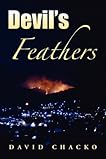
rating: 4 of 5 stars I really enjoyed this book. It is fast-paced and entertaining, but well written enough to be far from a guilty pleasure. I can see this ending up on PBS' Masterpiece Mystery someday.
I was also excited to find out that there are other stories about Onur Levent, as his character was by far the most interesting part of the story. The plot may or may not be somewhat predictable, I for one was more interested in Levent's process.
So while this book is not life changing, it is perfect summer reading for the reader who is bored with chick lit and typical mystery novels. I will definitely read Chacko again.
Transcendentalism can be defined as a belief system that adheres to the existence of a higher spiritual reality. This ideal reality transcends empirical knowledge and can only be experienced through intuitive, spiritual experience. At first look, this definition seems like it could have aspects in many religions and philosophies, and indeed it does seem to lend itself to any mystical or supernatural idea. So how can we understand transcendentalism for what it truly is? We begin by looking at the history of transcendentalist thought, and then explore the ideas and contributions of some of it’s major thinkers.
Transcendentalism begins as a form of Unitarianism, which itself begins as a deviation from orthodox Calvinism. Unitarians rejected the Calvin doctrines of predestination and the Trinity. Predestination is the belief that all events, including those in the next life, have already been determined and are now unavoidable; therefore free will does not exist. Many people, including Unitarians, find this outlook as rather bleak. Calvinists in the 18th and early 19th centuries also had a habit of encouraging speculation on who was destined to be saved, a rather alienating (not to mention philosophically pointless) practice. Unitarians believe in free will, and hold that one can create one’s own “fate”. The Unitarians gain their name from their rejection of the Trinity, or the mainstream Christian idea that God is one being with three consciousnesses or manifestations. While various groups had various ways of interpreting Christianity this way, usually by rejecting the divinity of Jesus, all agreed that God is one and only one personage or consciousness. William Ellery Channing is considered the Unitarians leading pastor at the time, in part because he adopted the once derogatory term Unitarian to describe his beliefs in 1819. He greatly influenced transcendentalists by his proposition that humans could “partake” of divinity and therefore become closer to and more like God.
However, transcendentalists did reject the idea that miracles proved the truth of religion, an attempt to prove the existence of God empirically. In an address to the HarvardDivinitySchool in 1838, Ralph Waldo Emerson expounded his (and other transcendentalists) view that “conversion by miracles is a profanation of the soul.” The miracles described in scripture cannot be considered empirical because it is not first hand experience , but even if one saw a miracle, one would not be truly converted-that required something else. Emerson also attacked the church as an “injuror of man” a direct contradiction of true Christianity. Andrews Norton, the so-called “Unitarian Pope”, publicly and angrily responded to Emerson’s “incoherent rhapsody”. It became clear that this new school of thought was not to become a religious interpretation of Unitarianism but a completely new branch of independent philosophy.
While transcendentalism can be seen as a mode of thought, there are key components thereof and, as Emerson pointed out, it has root in philosophical traditions of Plato, Hume, and Kant. Transcendentalism holds that a) Each individual has free will and a portion of divinity within them and can receive personal revelation through the form of intuition; b) This world is an often symbolic representation of higher powers; c) Science, the senses, and institutions (including religion) can only go so far to help us understand this world and the “higher reality”. It is intuition and the action of the individual that must do the rest. Transcendentalist thought has had immense influence on American art and spirituality to this day, but we will focus on four major thinkers and their ideas to better understand this radical belief system.
The Eccentric: Amos Bronson Alcott
Connecticut, 1799-1888
"The good Alcott; with his long, lean face and figure, with his worn gray temples and mild, radiant eyes; all bent on saving the world by a return to acorns and the golden age; he comes before one like a venerable Don Quixote, whom nobody can laugh at without loving." –Thomas Carlyle
The most extreme transcendentalist was Amos Bronson Alcott. Alcott received very little formal school, however he managed to teach himself to read and write, becoming a self-educator and an innovative educator of others.
Deviating sharply from the norm, Alcott believed that education should be about freeing the child to follow his/her natural impulses. It should also be philosophical and physical in nature. Alcott introduced gymnastics, playtime, and even human physiology into classrooms, reflecting his belief that mind and body were of equal importance. He used teaching techniques such as the honor system and Socratic dialogue. His methods raised much suspicion and when he admitted an African-American child into his school in Boston, it was closed. This first school, held in a MasonicTemple, was not the last. The Alcotts were always poor, until daughter Louisa May Published best-seller Little Women.
Alcott was very mystical, even for a transcendentalist. He believed that spirit was the only reality, everything else emanated from it. He believed in intuition to the point of visions, and that humanity had been in an existence before the current one, or preexistence. He also thought that humans can find truth without organized religion, an idea that attracted many to transcendentalism.
Transcendentalists were criticized as being brilliant but impractical, and this was certainly true of Alcott. However, in Conord, Alcott was able to do his job freely and met with success. He started the Concord Summer School of Philosophy and Literature, which ran for nine years. Despite his radicalness at the time, Alcott influenced many modern educators by expounding the idea of a teacher having responsibility to the students.
The Sage: Ralph Waldo Emerson
Massachusetts, 1803-1882
“How rare he was; how original in thought; how true in character!” –The Chicago Tribune
Ralph Waldo Emerson is considered “the most thought-provoking American cultural leader of the mid-nineteenth century”. Though he was a dissident and unorthodox, at his death at age seventy-nine he was eulogized extravagantly.
Emerson was the son and grandson of ministers, and despite being raised by a poor single mother, entered Harvard at age fourteen. He became a Unitarian minister at age twenty-three. As we have seen above, he eventually left the church; among other things, he no longer believed in Communion. He became a popular attraction at lecture clubs, eventually organizing his own courses. These later comprised his books. While Emerson’s lectures were not always agreed with, or even understood, they were always popular. He created controversy by attacking materialism, organized religion and slavery. He is considered the epitomal transcendentalist, though he never seemed comfortable with that term. He did hold to the ideas of individuality, and wrote of something called the Over-Soul, which we should try to harmonize with. (This can be compared to the Holy Spirit or Tao.) Emerson’s real purpose was to help create an American culture, which he certainly has done. He wrote and lectured about man’s nobility, nature’s link to spirituality, and God’s relation to the Universe. He was an amazing writer, poetic in his prose. His legacy is that of a brilliant writer and speaker, wise and sincere.
The Prodigy: Sarah Margaret Fuller
Massachusetts, 1810-1850
“If you have knowledge, let others light their candles in it.” –Sarah Margaret Fuller
Sarah Margaret Fuller is one of the many under-appreciated women of history, however it may be because her life ended tragically, rather than due to her womanhood. One gets the impression that Fuller would not let that happen. Fuller’s father was supportive of her education, beginning her Latin lessons at six. She soon was reading classical literature and writing.
Fuller began giving lectures at clubs, but soon faced criticism for speaking to audiences that included men. Rather than retreating into obscurity, she cleverly decided to give lectures at home, as “conversations”. This resulted in her book Women in the Nineteenth Century, in which she discussed social restrictions on women, as well as how they could fulfill their potential. Fuller became the editor of the transcendentalist journal The Dial. Her excellent artistic and literary criticism got her a job as a critic for the New York Tribune.
Fuller eventually settled in Rome, where she and her husband fought for independence from Papal authority, which failed. She wrote heavily during this time, which resulted in a history of the failed revolution. Sadly, Fuller, her husband, and son died in a shipwreck off Fire Island. As if this wasn’t tragic enough, the entire history of the Roman Revolution was also lost.
The Rebel: Henry David Thoreau
Massachusetts, 1817-1862
“His soul was made for the noblest society.” – Ralph Waldo Emerson
Henry David Thoreau has had a global influence, particularly the idea of civil disobedience, which influenced, among others, Mohandas Gandhi. He was also a notable nature writer.
Thoreau gained a reputation as an individualist at Harvard. While not unpopular, he spent his time writing, determined to be a writer no matter what. Of course, this was an impractical career, and most of Thoreau’s life was spent attempting to survive and write at the same time.
Thoreau’s ideas mainly focused on nature, to which he seemed almost addicted. While transcendentalism holds nature as a symbol of higher truths, Thoreau nearly deifies it. He also argued heavily for individual conscience, taking ideas of individuality and intuition to the fullest-one could (and should) break the law if that is what conscience dictates. He was even arrested for refusing to pay taxes to support a nation involved in slavery, and usually preached pacifism. He also believed one’s energy should be fully focused on what one thinks is right, avoiding any distractions, and felt that people enslave themselves at every turn. Walden, his most famous work, is essentially advice on how to avoid distraction and slavery, as well as a triumphant denial of society’s superficial values. The original title-page featured a rooster, a symbol of cocky defiance.
Thoreau was most admired by his friends (and is admired today) for his complete application of philosophical principles. While many hold philosophy or religion in the abstract, Thoreau sees it as reality. As Emerson said, he “wished to settle all his practice on an ideal foundation.”
Goodman, Russell, "Transcendentalism", The Stanford Encyclopedia of Philosophy (Spring 2009 Edition), Edward N. Zalta (ed.), URL = .
Remnants of Romanticism: Evidence of Romantics Today
Western Civilization: Renaissance to the Present
Khrystine Kelsey
Romanticism was an artistic and literary movement of the nineteenth century. While the meaning has been lost to many, associating the word only with erotic love, elements of romanticism are still thriving today.
The reason the term romance has been adopted by lovers the world over, is that one can often fully appreciate the romantic sensibility when one is in love. Romantics emphasize the reality of feelings, passion, and intuition. All of these come into play when one is in love-there is an intuitive connection to the other person, feelings blind reason, and everything is felt and done more passionately. The true romantic advocates being in this world at all times. Anytime we see a Dionysian character, they are romantic. Modern examples of romantic/Dionysian characters can be seen in the T.V. show Bones, an FBI drama that is essentially a comparison of Dionysian and Apollonian characters. In one episode, Agent Sealy Booth, annoyed at an ice cream truck that has interrupted his phone call, whips out his Government Issue gun, and shoots the clown shaped speaker. While one can debate the various moralities and practicalities of such an act, it is a romantic gesture.
Science has recently found that when one is in love, the mind experiences the world similarly to the mind under the influence of certain drugs. Many artists throughout the ages have taken drugs to tap into creativity, which is considered somewhat of a supreme power for romantics. While not all romantics use or advocate the use of drugs, the “sex, drugs, and rock and roll” lifestyle is thoroughly romantic. As one famous rock star said, “We’re all just a bunch of romantics born in the wrong time period.” * The stereotypical rock star, with their rule by passionate impulses such as “looking for one thousand brown M&Ms to fill a brandy glass, or Ozzy wouldn't go on stage that night”**, is always in this romantic mode, and their fans are also usually romantic, fully accepting the genius and power of such artists. (e.g. “That concert was totally worth $X.” “It would have been worth it if they had just played Baba O’Riley and left.” “It would have been worth it if Townsend had come out, done the windmill and left.”***)
Romantics also have a fascination with the other, and usually glamorize it, whether it is the poor, the rich, gypsies, frontiersmen, prostitutes, and the list could go on and on. Director Baz Luhrman is a modern example of this, with such movies as Romeo + Juliet, Moulin Rouge, and Australia. As is the romantic way, all such things, even the dark, horrible, or strange, are beautiful and meaningful. These three movies are full of spectacle, and whether one enjoys them or not, they are in style and content some of the best examples of modern romanticism.
In the same vein, romantics are fascinated by the supernatural, whether it is religious, fantastical, or just plain weird. Any speculative fiction is most necessarily romantic, even if it proclaims not such romantic ideals. You simply cannot have a “naturalist” speculative fiction. Even stories written on the basis of more naturalist viewpoints, such as science fiction, end up turning out romantic in the end if only because they have a point. (Naturalists, as a response to romance, argue that nothing inherently has a point beyond science and what we say it does.) However, of course, this can be done convincingly or unconvincingly. Vampires seem to be a particularly timely example of this, as they have seen a resurgence of popularity due to Stephenie Myer’s Twilight series. Vampires are often portrayed a strangely beautiful, since the Romantic Movement society has never been able to go long without their stories. In this newest incarnation, as in virtually all others, the young maiden has a strange quasi-sexual desire to be consumed by a young strangely-virile-even-when-undead vampire. Religious subjects are usually more convincing, partly because religion also usually has an element of the supernatural in it.
Romantics are particularly interested in religion, even if many reject the organized kind. Most romantics believe in an “Absolute”, which could alternatively be called God, energy, nature, etc. It is not surprising that most romantics, if religious, follow traditions that are more mystic. Religions provide an opportunity for the romantic to more concretely visualize a perfect world.
Romanticism’s desire for idealized utopias gave rise to nationalism, in both positive and negative aspects. This broad term is the only real political one romantics agree upon, though they are also known for favoring revolutions, and some confused romantic support revolutions that eventually oppress the creativity and freedom they find so important (e.g. fascism, communism). Due to a romantic’s passionate nature, it is very easy for one to idealize nations, parties, or people. In the last administration, we have seen romantics viewing the war in Iraq as an opportunity to bring freedom to an oppressed people. We have also seen romantics who claim it is the signal for a new revolution in which the constitution is “actually upheld”. Both romantics, of course fiercely love America, and the same person based on new information or enlightenment on the issues at hand might hold both views. ****
Romantics also have a serious crush/love affair/worship (depending on the person) of nature, particularly as untamed. Nature represents the authenticity and unspoiled passions that romantics so earnestly search for. More humanistic romantics see man as a harmonious part of nature, others see us as highly detrimental to it, but both agree that humanity should check itself before making an impact on it. (An extreme view can be seen in Alan Weisman’s The World without Us.) All environmentalism is a romantic sentiment, and there has been a renewed interest in it lately as evidence for Global Warning is becoming harder to sweep under the rug. Even fashion magazines, wal-mart, and car companies, the triumvirate of consumerism have been advocating “green” practices lately. This nature also applies to people and society, especially in the case of urban romantics, whose numbers have grown throughout the last century. These romantics appreciate the universalism of a kid playing ball with a dog in the park, and see beauty in the street musician outside the theatre. Urban romantics, unheard of until the industrial revolution became widespread, have a need for nature as well. This often manifests in wanderlust, and even the most citified romantic needs time in a park now and then. As the ultimate city girl, but nonetheless romantic character Carrie Bradshaw of Sex and the City said, “City girls are just country girls in cuter outfits.”
One character has emerged from the romantic ideal as the romantic hero; he is sometimes called the anti-hero. This hero fights within themselves and society to be themselves. They can be moody, even obnoxious at times, and they are usually a loner. The apex of their heroism is to know themselves, rather than to conquer an outside enemy. Good examples of triumphant romantic heroes are Andre and Kyra in the book We the Living by Ayn Rand. Andre commits suicide after he realizes he is serving a corrupt state, and Kyra dies moments away from the border of the Soviet Union. Despite the tragic ends, this is a triumph romantically; both characters are free from society. A romantic tragedy would be 1984 by George Orwell, in which Winston, on the verge of being a revolutionary, is brainwashed by the state. A more recent romantic hero, who does affect society for the better (a plus but not a goal of romantic heroes), would be John Bender (played by Judd Nelson) in The Breakfast Club. While all the characters in this movie are heroes, Bender is the hero and the best example of a romantic one. Class is not important to romantic heroes; Bender is at the lowest end of the spectrum. He is the loner, and seriously offends every other character at least once. He is a revolutionary in the sense that he is completely against the administration of the school. He even has long unkempt hair, reminiscent of paintings of Byron. The school is the ultimate romantic villain-not an individual, but a body, who uses fear and trades on authority to abuse the students, who are not to be believed, even (or especially) by their parents.
Romanticism can cause many problems. Even to a self-proclaimed romantic like me, it is not always ideal. I am a humanist first, a romantic humanist, not a humanistic romantic. I see no point in contemplating a world without us, even if I do believe in creating sustainability. I am a city girl myself, which gives me authority to write on urban romantics. I believe, at least politically, that we should be tempered by reason. Nevertheless, as a romantic, I will never stop believing that people are at their best when given complete freedom to live their ideals. I will never be convinced that I am imagining things when my intuition is telling me what to do. I will always keep a healthy respect for the supernatural, not messing with what I do not understand. I am artistically of the romantic school, and even historically. I will assume people are and were noble until given evidence to the contrary. You will find me in any group of people determined to make the world as it should be, and not merely what it is. To quote another romantic, undoubtedly my biggest influence, “You will find me at the foot of every rainbow, searching for the vision seldom seen.” *****